Behavioural issues
Puppy Anxiety UK 2026: Which Calming Products Are Actually Safe?
Most calming products are not designed for under-6-month puppies. What is actually safe for puppy anxiety (Zylkene, Adaptil, low-dose L-theanine), what to avoid (valerian, melatonin, high-strength chews), the 5 types of puppy anxiety, and when normal puppy worry needs a vet (UK 2026).

Quick Answer
Most puppy anxiety is preventable. The critical socialisation window (3-14 weeks) is the single most important period for building a confident adult dog. For first-night crying, sleep in the same room — never leave a puppy to "cry it out." If anxiety worsens after 2-3 weeks of consistent training, see your vet.
The 5 Types of Puppy Anxiety (And What Causes Each)
Puppies experience anxiety differently from adult dogs. Their developing brains are still forming neural pathways, which means early experiences have an outsized impact on lifetime behaviour. Understanding the specific type of anxiety your puppy is showing helps you target the right solution. And if it is your mood that is struggling rather than the puppy's behaviour, that is common too and has a name — see our guide to the puppy blues.
1. Separation Anxiety
The most common anxiety in puppies. Your puppy has just been removed from their mother and littermates — the only security they've ever known. Crying, whining, and destructive behaviour when left alone are normal in the first few weeks but should improve with gradual training.
Signs: Crying or howling when you leave the room, following you everywhere ("velcro puppy"), destructive behaviour near exit points, toileting indoors despite being house-trained when you're present.
The PDSA recommends teaching independence from day one: use stair gates to create distance while the puppy can still see, smell, and hear you. Start with very short separations (seconds) and gradually build up. Never leave a dog alone for more than 4 hours.
2. Noise Sensitivity
Affects approximately 32% of dogs. Puppies who aren't exposed to a variety of sounds during the critical socialisation window (3-14 weeks) are significantly more likely to develop lifelong noise phobias.
Common triggers: Fireworks (the most common UK trigger), thunder, vacuum cleaners, washing machines, traffic, doorbells.
Dogs Trust provides a free "Sounds Scary" programme for desensitising dogs to fireworks, thunder, and other sounds. Start at very low volume, pair with treats and play, and increase gradually over weeks — begin at least 2 months before anticipated trigger events like Bonfire Night.
3. Car Anxiety
Very common in puppies because the structures of the inner ear used for balance are not yet fully developed, making motion sickness more likely. This physical discomfort quickly becomes associated with anxiety about the car itself.
Training approach: Start with the car stationary — let the puppy explore and reward calm behaviour. Progress to engine on but not moving, then journeys of just 5 minutes. Keep the car cool with good ventilation. Make destinations positive (park, play) rather than only the vet. See our full car anxiety guide for a detailed desensitisation plan.
4. Social Anxiety
Puppies who miss adequate positive exposure to people, dogs, and environments during the socialisation window can develop generalised social anxiety. Watch for cowering, tucked tail, whale eye (showing whites of eyes), lip licking, yawning, or hiding behind you when approached by unfamiliar people or dogs.
Important distinction: A puppy who is cautious but willing to approach at their own pace is within normal range. A puppy who consistently freezes, attempts to flee, or shows escalating defensive behaviour needs professional support.
5. Generalised Anxiety
Some puppies show anxiety across multiple situations rather than in response to a specific trigger. This can indicate a genetic predisposition (certain breeds are more anxiety-prone), inadequate early socialisation, or an underlying health issue. If your puppy seems anxious about everything, a vet check should be your first step.
The Science: Puppy Fear Periods
Puppies go through two distinct fear periods where they are unusually sensitive to negative experiences:
- First fear period (8-11 weeks): Often coincides with when puppies go to new homes. A single frightening experience during this window can create a lasting phobia.
- Second fear period (6-14 months): Previously confident puppies may suddenly become fearful of familiar things. This is temporary but requires patience — don't force exposure.
During fear periods, prioritise positive experiences and avoid overwhelming situations. This phase will pass.
The Critical Socialisation Window: 3-14 Weeks
This is the single most important developmental period for preventing anxiety in adult dogs. During this window, your puppy's brain is neurologically primed to accept new experiences as normal parts of life. Every experience produces trillions of new brain connections that last for life.
After about 14 weeks, the window begins to close and the puppy becomes naturally more cautious of unfamiliar things. Research published in PMC found that puppies without exposure to humans before 14 weeks may be unable to form normal relationships with humans — the fear response can become permanent.
What to Expose Your Puppy To
The Kennel Club recommends pleasant social interactions with adults, children, vets, adult dogs, and other animals, plus careful exposure to different situations: traffic, crowds, car travel, vacuum cleaners, and any sights and sounds the dog will encounter in daily life.
The Vaccination Dilemma
The socialisation window overlaps with the vaccination schedule. Puppies typically complete vaccinations at 10-12 weeks and aren't fully protected until 1-2 weeks after the final injection. Here's how to socialise safely before full vaccination:
- Carry your puppy to experience outdoor environments (don't put them on the ground in public areas)
- Invite vaccinated, healthy adult dogs to your home
- Attend puppy classes that require vaccination evidence and are held on regularly cleaned surfaces
- Expose to different surfaces, sounds, and textures at home
- Drive around to experience car travel and different visual environments
- Introduce to people of different ages, appearances, and clothing (hats, high-vis, umbrellas)
- Use the free Dogs Trust "Sounds Scary" programme at low volume
The 3-Second Rule
Quality matters more than quantity. Let the puppy approach new things at their own pace. If they choose to engage, allow 3 seconds of interaction, then call them back. This prevents overwhelming while building confidence.
Signs of overwhelm: Tucked tail, ears flat back, hiding behind you, whale eye, lip licking, yawning in a stressful context, freezing in place, or refusing treats (too stressed to eat). If you see these, calmly increase distance from the stimulus.
First Night Survival Guide
The first night is often the most stressful — for both of you. Here's what UK veterinary charities actually recommend (it may surprise you).
Do Not Leave Your Puppy to "Cry It Out"
Both the PDSA and Blue Cross explicitly advise against this. The PDSA states they would "never recommend ignoring your puppy when they cry at night, especially in their first few nights." The RSPCA notes that puppies left to cry will only learn that being alone is terrifying, and stress hormones released during extreme distress can take days to reduce.
Step-by-Step First Night Plan
- Sleep in the same room for the first few nights. Sleep on the sofa or bring the crate/bed into your bedroom. This dramatically reduces first-night distress.
- Prepare the sleeping area: Comfortable bedding, an item that smells of mum/littermates (ask the breeder), a safe chew toy, and warmth. A ticking clock or heartbeat toy can mimic the sound of littermates. A purpose-designed calming dog bed with raised edges helps young puppies settle by giving them a defined "den" — the enclosed feel mimics being curled up against littermates.
- Plug in an Adaptil diffuser 24 hours before. A randomised, double-blind trial found puppies wearing Adaptil showed significantly lower vocalisation on the first night (p ≤ 0.001), with crying ceasing completely by night 5.
- If the puppy cries, check calmly. They may need the toilet (young puppies can't hold their bladder overnight). Quiet toilet break, then back to bed with minimal fuss.
- Gradually move. Over 1-2 weeks, gradually move further from the puppy until you're in your normal sleeping position.
Timeline Expectations
| Period | What to Expect |
|---|---|
| Nights 1-3 | Some crying is normal. 1-2 toilet breaks overnight. |
| Nights 4-7 | Crying should reduce significantly. Toilet breaks may still be needed. |
| Weeks 2-3 | Most puppies sleeping through or waking once. Minimal crying. |
| Week 4+ | Reliably sleeping through (6-8 hours). |
If there is no improvement after 2-3 weeks, or if distress is escalating, consult your vet.
Are Calming Products Safe for Puppies?
Not all calming products are appropriate for puppies. Here's what the evidence says about each option.
| Product | Safe for Puppies? | Minimum Age | Notes |
|---|---|---|---|
| Adaptil (pheromone) | ✅ Yes | From birth | Best evidence base. Non-sedating. Adaptil Junior collar specifically designed for puppies. |
| Zylkene (alpha-casozepine) | ✅ Yes | Any age (consult vet for very young) | Milk protein derivative. Non-sedating. Good evidence. |
| L-theanine | ✅ Generally yes | 12+ weeks | Needs 4-6 weeks for full effect with daily use. |
| Valerian (oral) | ⚠️ Caution | Not recommended without vet approval | Can be sedating. Not studied in puppies. |
| Pet Remedy (spray/diffuser) | ✅ Yes | Any age (environmental use) | Low concentration, environmental application only. |
| CBD/hemp | ❌ Not recommended | 12+ months | Limited evidence. Unclear UK regulation. See our CBD guide. |
| Melatonin | ⚠️ Consult vet | Not typically used in puppies | More commonly used in adult and senior dogs. |
The Best Option for Most Puppies: Adaptil Junior
The Adaptil Junior Collar is specifically designed for puppies. It releases a synthetic copy of Dog Appeasing Pheromone (DAP) — the pheromone mother dogs naturally produce when nursing. Key features:
- Adjustable size fits puppies of all breeds
- One collar lasts approximately 4 weeks
- Backed by a randomised, double-blind trial with 66 puppies
- Cannot cause overdose — pheromones are species-specific and non-sedating
- Safe from birth with no known side effects
Building Independence: Separation Training From Day One
Prevention is far easier than treatment. The Blue Cross states that the best way to prevent separation problems is to teach independence from a young age. Here's a practical plan:
Week 1: Foundation
- Use stair gates so the puppy can see and hear you but learns to be in a different space
- Leave the room for 10-30 seconds while the puppy is distracted with a Kong or chew
- Return calmly — no excited greetings
- Practise 5-10 times daily
Weeks 2-3: Building Duration
- Gradually increase time out of sight to 1-5 minutes
- Start leaving the house briefly (pop to the bins, check the post)
- Vary your routine — don't always pick up keys before leaving
- Leave a radio or TV on for background noise
Weeks 4+: Extending
- Work up to 15-30 minutes alone
- Leave a puzzle feeder or stuffed Kong
- Use a camera to monitor — if the puppy settles within 10 minutes, they're doing well
- Never jump from 5 minutes to 2 hours — increase gradually
Finding Puppy Classes in the UK
Puppy classes provide controlled socialisation with other puppies and people, plus introduce basic training in a supportive environment. The Kennel Club's Good Citizen Puppy Foundation can be started from 8 weeks of age.
Where to Find Classes
- Kennel Club "Find a Club" — over 1,700 organisations across the UK
- Puppy School — a UK-wide network of licensed puppy trainers, 4-6 week courses
- Dogs Trust — run puppy training classes in some areas
- ABTC-registered trainers — the UK's regulatory body for animal behaviour practitioners
What to Look For
- Force-free, reward-based methods only
- Small class sizes (maximum 6-8 puppies)
- Proof of vaccination required
- Qualified instructor (ABTC-registered or Kennel Club accredited)
Avoid These Red Flags
Avoid any class using punishment, choke chains, prong collars, or "dominance" theory. The PDSA, Blue Cross, RSPCA, Dogs Trust, and Kennel Club all endorse positive reinforcement methods only. The dog training industry in the UK is unregulated — anyone can call themselves a "behaviourist." Always check ABTC registration.
When to See a Vet: Red Flags
A vet visit should always be the first step if anxiety is severe, because medical conditions can mimic or worsen behavioural problems. See your vet if your puppy shows:
- Persistent distress when left alone that doesn't improve after 2-3 weeks of gradual training — especially self-injury or extended vocalisation
- Fear-based aggression — growling, snapping, or biting when approached, especially if worsening
- Inability to settle anywhere — constant pacing, panting, scanning with no calm periods
- Complete shutdown — freezing, refusing food, refusing to play in response to normal stimuli
- Self-harm — excessive licking creating sores, tail chasing, or compulsive behaviours
- Behaviours getting worse over time despite appropriate management
Finding Professional Help
Ask your vet for a referral to an ABTC-registered Clinical Animal Behaviourist (CAB) or Veterinary Behaviourist — the highest level of behavioural qualification. You can also find practitioners directly at abtc.org.uk or through the APBC (Association of Pet Behaviour Counsellors) at apbc.org.uk.
Early intervention during puppyhood has the best outcomes. The longer anxiety behaviours persist, the harder they are to treat.
Free UK Resources
- Dogs Trust "Sounds Scary" — free downloadable sound therapy programme
- PDSA (pdsa.org.uk) — free pet health advice and puppy guides
- Blue Cross (bluecross.org.uk) — behaviour and training advice
- Kennel Club Good Citizen Scheme — Puppy Foundation from 8 weeks
- ABTC (abtc.org.uk) — find registered behaviourists and trainers
UK picks from this guide
Products covered in this guide
Direct affiliate links to the UK products discussed above — prices refreshed from Amazon UK, no upcharge for using them.

Silentnight
Silentnight Donut Calming Dog Bed
Luxury plush donut bed from trusted UK sleep brand. Machine washable with soft fluffy doughnut design for anxiety relief.
£29.75
Buy on Amazon UK
ADAPTIL
ADAPTIL Calm Home Diffuser Starter Kit
Plug-in diffuser releasing synthetic Dog Appeasing Pheromones (DAP). The market leader with 23+ clinical studies.
£23.00
Buy on Amazon UKVetoquinol
Zylkene Calming Supplement
Calming supplement with Alpha-Casozepine, a peptide derived from milk protein. Has published evidence for canine anxiety when used alongside behaviour modification.
£18.18
Buy on Amazon UK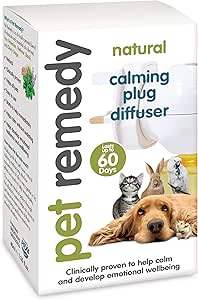
Pet Remedy
Pet Remedy Natural De-Stress Plug-In Diffuser
Multi-species calming diffuser using Valerian. Works on dogs, cats, and other mammals.
£16.78
Buy on Amazon UKCaptain Calm earns a small commission from qualifying Amazon UK purchases at no extra cost to you. Recommendations are based on independent research and review. Prices are pulled from Amazon UK and refreshed through the day; the price shown at checkout applies.
Keep reading
More on behavioural issues

Dog Anxiety in Car: 8 Symptoms & How to Fix It (UK 2026)
Dog panting, drooling or shaking in the car? See 8 car anxiety symptoms, what triggers each, and the UK desensitisation plan that fixes most cases in 2-8 weeks. Plus when sudden car anxiety means a vet visit, not just training.

Dog Anxiety at Night: Causes, Solutions & When to Worry (2026)
Why is your dog suddenly anxious at night? Common causes include separation anxiety, cognitive decline in older dogs, and pain. Get proven solutions for peaceful sleep.

Rescue Dog Anxiety UK: The 30-Day Settling Plan (3-3-3 Rule, 2026)
Nervous rescue dog? Day-by-day plan using the 3-3-3 rule (3 days decompression, 3 weeks routine, 3 months bonding). Normal vs concerning signs, the first-month mistakes that set settling back, and when to call a behaviourist (UK 2026).