Product evidence
Calming treat side effects: what to watch for.
“Natural” doesn’t mean “no side effects.” A by-ingredient breakdown for L-theanine, L-tryptophan, valerian, chamomile, CBD and more, with what the product datasheets say and the red flags.
Quick answer
Most calming treats are low risk for healthy adult dogs at the label dose; the common side effects are mild drowsiness and soft stools. L-theanine had no reported side effects in the dog studies. Chamomile is on the ASPCA toxic list. L-tryptophan (in YuMOVE, KalmAid, ADAPTIL Chew, VETIQ and NutriPaw) must not be combined with SSRI medicines without your vet. Talk to your vet before giving calming treats to puppies, pregnant dogs, or dogs on medication.
Side Effects by Ingredient
Different calming ingredients carry different risk profiles. Here's what the evidence says about each one.
L-Theanine Side Effects
L-theanine is an amino acid from green tea. It has been tested in three small dog studies, all with Anxitane, and no side effects were reported in any of them.
Safety Rating: Low risk (no side effects reported in dog trials)
- No side effects reported at the label dose (Anxitane: 25mg under 10kg, 50mg for 10-24kg, 100mg for 25kg and over, twice a day)
- No sedation in the placebo-controlled study
- No drug interactions studied in dogs
- The dog studies lasted up to 9 weeks; there is no longer-term data
- 17 of 18 owners were satisfied in one open-label study without a placebo group (Pike 2015)
When to be cautious: Very high doses (10x+ recommended) have not been studied in dogs. Stick to manufacturer guidelines. If your dog takes any medication, mention L-theanine to your vet as a precaution.
Valerian Root Side Effects
Valerian is a herbal calming ingredient. Dorwest Scullcap & Valerian tablets (daily herbal tablets that were licensed as a veterinary medicine) and Dorwest's Valerian Compound drops (for events, working in about 30 minutes) are the main UK products.
Safety Rating: Generally Safe (with caveats)
- Restlessness or anxiety — reported very rarely (under 1 in 10,000 animals) in the Dorwest datasheet
- Diarrhoea, lethargy or malaise — reported on very rare occasions
- Drowsiness — possible, as valerian is sedative-leaning
- Strong odour — some dogs refuse valerian-containing products
When to avoid: The datasheet does not recommend use in pregnant or nursing dogs. It lists no known interactions, but ask your vet before combining valerian with sedating medicines (gabapentin, trazodone, acepromazine). Stop if your dog becomes more anxious rather than calmer.
L-Tryptophan Side Effects
L-tryptophan is a serotonin precursor found in YuMOVE Calming Support, KalmAid, ADAPTIL Chew, VETIQ Serene and NutriPaw. It's low risk on its own but has one critical interaction to be aware of.
Safety Rating: Safe (one key warning)
- Mild drowsiness — possible at higher doses
- Digestive changes — occasional soft stools or reduced appetite
- Serotonin syndrome risk — if combined with fluoxetine (Reconcile), clomipramine (Clomicalm), trazodone or sertraline
Critical warning: Never combine L-tryptophan supplements with prescription SSRIs without vet approval. Both increase serotonin levels, and excessive serotonin can cause serotonin syndrome — a potentially serious condition with symptoms including agitation, tremors, rapid heart rate, and high body temperature. If your dog takes prescription anxiety medication, consult your vet before adding any L-tryptophan product.
Melatonin Side Effects
Melatonin is a hormone that regulates the sleep-wake cycle. Vets use it for night-time restlessness and noise fear. In the UK it is a prescription-only medicine, so it should come from your vet, not a pet shop.
Safety Rating: Wide safety margin at vet-prescribed doses
- Drowsiness — expected and usually desired
- Digestive upset — occasional at higher doses
- Hormonal effects — acts on reproductive hormones; ask your vet first for breeding dogs or dogs not yet mature
- Weight gain — reported with longer use
When to avoid: Don't give melatonin to diabetic dogs, pregnant or nursing dogs, or puppies without vet guidance. Never give human melatonin gummies or liquids: many contain xylitol (an artificial sweetener toxic to dogs) or 5-HTP. Too much melatonin causes vomiting, lethargy and wobbliness.
Alpha-Casozepine (Zylkene) Side Effects
Alpha-casozepine is a milk-derived peptide used in Zylkene. Few side effects have been reported.
Safety Rating: Low risk (no side effects reported in dog trials)
- No side effects reported in the main trial (Beata 2007)
- No sedation
- Contains no L-tryptophan
- A 2024 placebo-controlled trial found only a weak calming effect
One consideration: The active is a peptide from cow's milk casein, and the maker gives no allergy guidance, so ask your vet first if your dog has a milk-protein allergy. The maker also advises asking a vet before use in puppies or pregnant dogs.
Chamomile Side Effects
Chamomile appears in many calming chews (VETIQ Serene, NutriPaw and others), but it is not as harmless as its reputation.
Safety Rating: Caution
- The ASPCA lists chamomile as toxic to dogs: vomiting, diarrhoea, skin and allergic reactions, and bleeding tendencies with long-term use
- The amounts in calming chews are small, but no dog study has set a safe dose
- Avoid in dogs allergic to plants in the daisy family
CBD Oil Side Effects
CBD products for pets cannot legally be sold in the UK: the VMD treats them as veterinary medicines and none is authorised. A vet can prescribe one under the cascade.
Safety Rating: Use with Caution
- Drowsiness — common, especially at higher doses
- Raised liver enzyme (ALP) — seen in dog studies
- Digestive upset — diarrhoea, vomiting
- Label accuracy — only 10 of 27 pet hemp products were within 10% of their label claim, and 4 of 29 contained heavy metals (Wakshlag 2020)
Key concern: CBD inhibits cytochrome P450 liver enzymes, which metabolise many medications. This means CBD can increase the potency and duration of prescription drugs to potentially dangerous levels. Never combine CBD with any medication without explicit vet approval.
What Happens If You Give Too Many Calming Treats?
If your dog eats more than the label dose, what matters is the signs you see and the ingredients in the product. Here's how to judge it:
Mild Signs: Monitor at Home
- Increased drowsiness
- Soft stools or mild diarrhoea
- Reduced appetite
- Usually settles on its own; call your vet if it doesn't
Moderate Signs: Call Your Vet
- Significant sedation or lethargy
- Vomiting or diarrhoea
- Unsteady gait (ataxia)
- Contact your vet for guidance
Severe Signs, or Any Product With Xylitol: Emergency
- Extreme lethargy or unresponsiveness
- Difficulty breathing
- Seizures (rare)
- Emergency — contact your vet or call the Animal PoisonLine (01202 509000, a paid service) immediately
When to Stop Giving Calming Treats
Stop giving calming treats and contact your vet if your dog experiences:
- Vomiting or diarrhoea lasting more than 24 hours
- Paradoxical excitation (becoming more anxious, not less)
- Significant lethargy or inability to walk normally
- Loss of appetite lasting more than 48 hours
- Any allergic reaction (facial swelling, hives, difficulty breathing)
- Behavioural changes that concern you
Safe Use Guidelines
1. Start with the minimum dose
Give the lowest label dose for your dog's weight and observe for 5-7 days before increasing, and never go above the label dose without your vet.
2. Try one product at a time
Don't stack multiple oral supplements simultaneously. If the first doesn't work after 2-3 weeks, switch rather than adding another.
3. Check for drug interactions
Tell your vet about all supplements your dog takes, especially if they're on prescription medication.
4. Read the full ingredient list
Check for xylitol (sometimes listed as birch sugar), which is toxic to dogs, and for allergens. "Natural" doesn't mean safe for every dog.
5. Weight-based dosing matters
A 5kg dog and a 40kg dog need very different doses. Products with one-size-fits-all dosing are often underdosed for large dogs.
Are Calming Treats Safe for Puppies?
Many calming treats are labelled for adult dogs only, so check the label's minimum age before giving one to a puppy. The L-theanine studies enrolled adult dogs, Zylkene's maker advises asking a vet before use in puppies, and melatonin and CBD are off the table (prescription-only and illegal to sell for pets respectively). For puppies under 6 months, ask your vet first. Most puppy nerves respond better to routine, safe spaces and gradual socialisation than to supplements: see our puppy anxiety guide.
Frequently Asked Questions
Are calming treats safe for dogs?
Most calming treats are low risk for healthy adult dogs at the label dose, but not every ingredient is harmless: the ASPCA lists chamomile as toxic to dogs, and CBD products for pets cannot legally be sold in the UK. L-tryptophan (in YuMOVE, KalmAid, ADAPTIL Chew, VETIQ and NutriPaw) should not be combined with SSRI medicines without your vet. Ask your vet before giving calming treats to puppies under 6 months, pregnant or nursing dogs, or dogs on medication.
What are the side effects of calming treats for dogs?
The most common side effects are mild drowsiness, soft stools and reduced appetite. For Dorwest Scullcap & Valerian, the licence datasheet reports restlessness or anxiety very rarely, and diarrhoea or lethargy on very rare occasions. No side effects were reported in the L-theanine dog studies. Chamomile is on the ASPCA toxic list. Melatonin is prescription-only in the UK. If a side effect appears, stop the product and let it settle before trying again.
Can you give a dog too many calming treats?
Yes. Serious toxicity from calming treat ingredients is rare, but eating a lot at once can cause drowsiness, vomiting and diarrhoea, and products containing xylitol are dangerous in small amounts. Follow the label dose for your dog's weight. If your dog eats a whole pack, contact your vet or the Animal PoisonLine (01202 509000, a paid service).
UK picks from this guide
Products made with these ingredients
UK products built on the ingredients covered above. Zylkene contains no L-tryptophan; the other three do, so ask your vet first if your dog takes an SSRI. Prices refreshed from each retailer; using the links costs you nothing extra.

ADAPTIL
ADAPTIL Chew - Fast Acting
Event chew given about 30 minutes before fireworks, travel or a vet visit. L-tryptophan, green tea extract (L-theanine), thiamine and colostrum.
£21.16
Buy on Amazon UKVetoquinol
Zylkene Calming Supplement
Calming supplement with Alpha-Casozepine, a peptide derived from milk protein. Has published evidence for canine anxiety when used alongside behaviour modification.
£16.34
Buy on Amazon UK
Swedencare / NutriScience
KalmAid Tablets
Salmon-flavoured calming tablets with L-tryptophan. For events, give 1-2 hours before (Swedencare's guidance).
£14.25
Buy on Amazon UK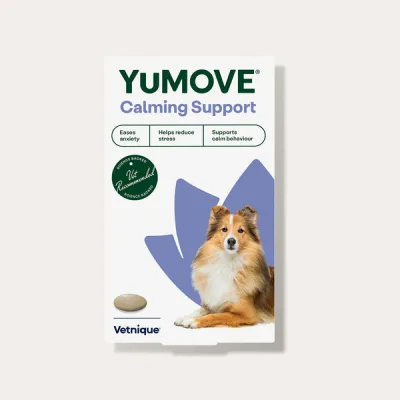
YuMOVE
Calming Support for Dogs
Once-a-day calming tablet: 200mg L-tryptophan with GABA fermentate, lemon balm and B-vitamins. Subscribe & Save at YuMOVE with free UK delivery.
£17.86first 2 Subscribe & Save orders, then £28.58; £35.72 one-off
Buy from YuMOVECaptain Calm earns a small commission from qualifying purchases through these links at no extra cost to you. Recommendations are based on independent research and review. Prices are pulled from each retailer and refreshed through the day; the price shown at checkout applies.
Important Reminder
Calming treats are not a substitute for addressing the root cause of your dog's anxiety. They work best alongside behavioural training, environmental management, and adequate exercise. For persistent anxiety symptoms, consult your vet — some dogs need prescription medication rather than supplements.