Product evidence
Calming Treats vs Pheromone Diffusers: Which Is Better for Dog Anxiety?
Should you give your dog calming treats or plug in a pheromone diffuser? We compare how each works, when to use which, and whether combining both is worth the cost.

Quick Answer
Calming treats work internally through ingredients like L-theanine and valerian (onset: 15-60 minutes). Pheromone diffusers work environmentally through synthetic Dog Appeasing Pheromones (onset: 24 hours). Treats are better for situational anxiety and travel; diffusers are better for home-based separation anxiety. Many vets recommend using both together.
How Calming Treats Work
Calming treats deliver active ingredients orally that affect your dog's brain chemistry. The most effective ingredients include:
- L-theanine: Increases alpha brain waves and boosts serotonin/dopamine (30-60 min onset)
- L-tryptophan: Serotonin precursor for sustained mood support (1-2 hour onset)
- Valerian: Direct GABA increase for fast-acting calming (15-30 min onset)
- Alpha-casozepine: Milk peptide that binds GABA-A receptors (1-2 week onset)
The key advantage of treats is portability — you can give them anywhere, anytime, and they work within your dog's body regardless of location.
How Pheromone Diffusers Work
Pheromone diffusers release synthetic Dog Appeasing Pheromones (DAP) — molecules that mimic the pheromones produced by lactating dogs to comfort their puppies. These pheromones are detected by your dog's vomeronasal organ and trigger a calming response.
- Adaptil: Synthetic copy of natural DAP (most researched brand)
- Pet Remedy: Valerian-based essential oil blend (different mechanism)
- Beaphar CaniComfort: Budget DAP alternative
The key advantage of diffusers is continuous, passive calming — they work 24/7 without you needing to remember to give a dose.
Head-to-Head Comparison
| Factor | Calming Treats | Pheromone Diffusers |
|---|---|---|
| How they work | Internal — brain chemistry | Environmental — vomeronasal organ |
| Onset | 15-60 minutes | 24 hours for full saturation |
| Duration | 2-8 hours per dose | Continuous (while plugged in) |
| Portability | Excellent — use anywhere | Home only (plug-in) |
| Multi-dog benefit | Individual dosing needed | All dogs in room benefit |
| Evidence strength | Strong (L-theanine, casozepine) | Mixed (some studies positive) |
| Cost (monthly) | £15-43/month | £20-25/month (refills) |
| Effort | Daily dosing required | Set and forget |
Best for Each Anxiety Type
Separation Anxiety
Winner: Pheromone diffuser + calming treats together
For separation anxiety, a diffuser creates a calm baseline environment while you're out, and a calming treat given 30-60 minutes before departure provides additional internal support. This is the combination most behaviourists recommend.
Noise Phobias (Fireworks, Thunder)
Winner: Calming treats
For fireworks and thunderstorms, the fast onset of calming treats (especially valerian-based options at 15-30 minutes) is essential. A diffuser won't react quickly enough to unpredictable events. Give treats 30-60 minutes before expected noise.
Travel Anxiety
Winner: Calming treats
Diffusers require a power socket, making them impractical for car journeys. Calming treats travel with your dog. Adaptil does offer a travel spray for car journeys, but treats provide more reliable calming via internal mechanisms.
General Home Nervousness
Winner: Pheromone diffuser
If your dog is generally anxious at home — pacing, inability to settle, excessive following — a diffuser provides continuous passive calming without the need to remember daily dosing. Add treats for particularly stressful days.
Multi-Dog Households
Winner: Pheromone diffuser
One diffuser (covering up to 70m²) benefits all dogs simultaneously, making it far more cost-effective than treating each dog individually with calming treats.
Can You Use Both Together?
Yes — and many vets recommend it. Calming treats and pheromone diffusers work through completely different mechanisms, so there's no interaction risk. A common protocol:
- Diffuser: Running 24/7 in the room where your dog spends most time
- Treats: Given 30-60 minutes before specific stressful events or departures
You can also add a ThunderShirt for a three-pronged approach: environmental calming (diffuser) + internal calming (treats) + physical calming (pressure vest).
Cost Comparison (Monthly)
| Product | Monthly Cost | Notes |
|---|---|---|
| YuMOVE Calming Support | £18-25 | Daily tablets (60 pack) |
| Adaptil Diffuser refill | £20-25 | One refill per month |
| Both combined | £38-50 | Comprehensive approach |
| Pet Remedy Diffuser refill | £12-16 | Budget diffuser option |
Our Verdict
Start with calming treats if your dog has situational anxiety. Start with a diffuser if your dog is anxious at home all day.
If single-product approaches aren't enough, combine both — they complement each other perfectly. For the strongest non-prescription protocol, use a pheromone diffuser at home, calming treats before stressful events, and a pressure vest during acute episodes.
See our full dog anxiety products guide for a complete overview of all product categories available in the UK.
UK picks from this guide
Products covered in this guide
Direct affiliate links to the UK products discussed above — prices refreshed from each retailer, no upcharge for using them.

ADAPTIL
ADAPTIL Chew - Fast Acting
Event chew given about 30 minutes before fireworks, travel or a vet visit. L-tryptophan, green tea extract (L-theanine), thiamine and colostrum.
£21.16
Buy on Amazon UK
ADAPTIL
ADAPTIL Calm Home Diffuser Starter Kit
Plug-in diffuser releasing a synthetic dog appeasing pheromone. The most-studied pheromone product; plug in 2-3 days before fireworks.
£16.56
Buy on Amazon UK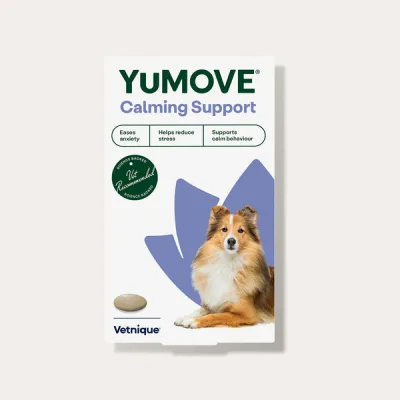
YuMOVE
Calming Support for Dogs
Once-a-day calming tablet: 200mg L-tryptophan with GABA fermentate, lemon balm and B-vitamins. Subscribe & Save at YuMOVE with free UK delivery.
£17.86first 2 Subscribe & Save orders, then £28.58; £35.72 one-off
Buy from YuMOVE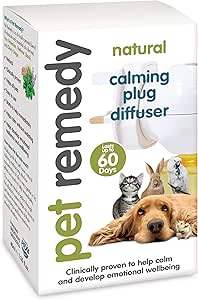
Pet Remedy
Pet Remedy Natural De-Stress Plug-In Diffuser
Multi-species calming diffuser using Valerian. Works on dogs, cats, and other mammals.
£16.78
Buy on Amazon UKCaptain Calm earns a small commission from qualifying purchases through these links at no extra cost to you. Recommendations are based on independent research and review. Prices are pulled from each retailer and refreshed through the day; the price shown at checkout applies.
Keep reading
More on product evidence

Calming Treats for Dogs That Actually Work (UK 2026 Evidence)
Which calming treats actually work? L-theanine and alpha-casozepine have real canine evidence; valerian and chamomile mostly don't. Onset times, doses by weight, side effects — and the UK treats that contain enough active ingredient to matter (2026).

Adaptil vs Pet Remedy 2026: Side-by-Side UK Comparison
Adaptil vs Pet Remedy compared: pheromone vs valerian oils, what the trials found, running costs (about £240 vs £75 a year for a diffuser), and which suits puppies, fireworks, travel or a home with cats.

Best Calming Sprays & Drops for Dogs UK 2026: 5 Compared
UK calming sprays and drops compared: Adaptil, Pet Remedy and Beaphar, plus oral drops like Dorwest Valerian Compound. Makers' timings, what the evidence shows, prices, when to choose drops over sprays, and which suits travel vs home anxiety.