Supplements & natural remedies
L-Tryptophan for Dogs UK: Dosage, Evidence & When It Actually Helps
L-tryptophan turns into serotonin and is in many UK calming supplements, but dog trials are mixed. Label doses by weight, what each study found, and which medicines it must not be mixed with.

Quick Answer
L-tryptophan is an essential amino acid that the body turns into serotonin, and it is in many UK calming supplements (YuMOVE Calming Support, KalmAid, ADAPTIL Chew). The dog evidence is mixed: one small 2000 study in aggressive dogs was partly positive, while the two largest trials (2009 and 2018) found no change in behaviour. There is no established supplement dose for dogs, so follow the product label. Do not combine it with fluoxetine (Reconcile), clomipramine (Clomicalm), trazodone, tramadol, selegiline or amitraz unless your vet agrees.
What is L-Tryptophan and How Does It Work for Dogs?
L-tryptophan is an essential amino acid that dogs cannot produce themselves—they must get it from their diet. It's the precursor to serotonin, the "feel-good" neurotransmitter that regulates mood, sleep, and anxiety levels.
When your dog consumes L-tryptophan, it follows this pathway:
- Absorption: L-tryptophan is absorbed from food or supplements in the gut
- Transport: It crosses the blood-brain barrier (competing with other amino acids)
- Conversion: Enzymes convert it to 5-HTP, then to serotonin
- Effect: Serotonin is involved in mood and sleep, but raising blood tryptophan hasn't been shown to change behaviour in dogs (see the studies below)
What the Research Actually Shows
The picture is genuinely mixed. A 2000 JAVMA study (DeNapoli et al., 11 dogs per group, one week per diet) found diet changes involving tryptophan and protein level affected aggression scores. But a larger 2009 trial (Bosch et al.) randomised 207 privately owned dogs for 8 weeks: a diet with 2.6 times the tryptophan raised blood tryptophan by 37% but produced no change in behaviour or saliva cortisol, and a 2018 graded-dose study (Templeman et al.) up to ~20mg/kg/day also found no consistent behavioural effect. The honest read: tryptophan looks more useful for the aggression end of the anxiety spectrum than for general anxiety.
L-Tryptophan vs L-Theanine: Which is Better for Dog Anxiety?
Both are popular natural supplements for canine anxiety, but they work differently:
| Feature | L-Tryptophan | L-Theanine |
|---|---|---|
| How it works | Converts to serotonin | In rats, raises serotonin and dopamine in the brain |
| Timing | No dog data; YuMOVE says expect results after 4-6 weeks of daily use | No dog data; Anxitane: twice daily from about 2 weeks before an event |
| Dog evidence | Two largest trials found no effect | Three small studies, positive, only one placebo-controlled |
| Key caution | Not with SSRIs and other serotonin-acting drugs | No interactions studied in dogs |
| Food timing | As the product label says | With or without food |
Bottom line: L-theanine's dog studies are small but positive; tryptophan's two largest trials found no effect. If you want to try a supplement for general anxiety, L-theanine is the better-supported start. If your dog shows aggression, see your vet or a qualified behaviourist first: the only tryptophan study in aggressive dogs had 11 dogs per group and changed the diet for a week at a time.
L-Tryptophan Dosage for Dogs by Weight
There is no established L-tryptophan dose for dogs: no veterinary formulary lists one, and the studies changed the whole diet rather than giving a supplement. Follow the product label. For context, ordinary dog food already supplies about 10mg per kg a day, and in a 24-week trial dogs ate up to about 20mg per kg a day with no consistent change in behaviour and no side effects reported.
Here is what the two most common UK products say on their labels:
| Dog Weight | YuMOVE Calming Support (200mg L-tryptophan per tablet) | ADAPTIL Chew |
|---|---|---|
| Up to 7kg | Half a tablet a day (100mg) | Half a chew |
| 8-15kg | 1 tablet a day (200mg) | Half a chew |
| 16-30kg | 2 tablets a day (400mg) | 1 chew |
| 31-45kg | 3 tablets a day (600mg) | 2 chews |
| Over 45kg | 4 tablets a day (800mg) | 2 chews |
ADAPTIL doesn't publish the L-tryptophan amount per chew, and KalmAid doesn't publish its per-tablet amounts either, so follow those packs.
A Note on Food Timing
Tryptophan competes with other amino acids to reach the brain. In one five-dog study, a high-carbohydrate meal improved that balance for about six hours, but no study has tested whether this changes behaviour. Give products as their label says.
Is L-Tryptophan Safe for Dogs?
L-tryptophan is generally considered safe for dogs when used appropriately. It's a natural amino acid found in many protein sources including turkey, chicken, and fish.
Potential Side Effects
No side effects were reported in the dog feeding trials. Stop and call your vet if you see vomiting, diarrhoea, agitation, tremors or a high temperature; the last three can be signs of serotonin syndrome.
When NOT to Use L-Tryptophan
Avoid L-tryptophan supplementation if your dog:
- Takes fluoxetine (Reconcile), clomipramine (Clomicalm), trazodone, tramadol, selegiline or amitraz - risk of serotonin syndrome, unless your vet agrees. Fluoxetine's data sheet asks for a 6-week gap after stopping it
- Has liver disease - may affect tryptophan metabolism
- Is pregnant or nursing - insufficient safety data
Serotonin Syndrome Warning
Never combine L-tryptophan with prescription antidepressants or anti-anxiety medications without veterinary supervision. Serotonin syndrome is a potentially life-threatening condition caused by excessive serotonin levels.
UK Products Containing L-Tryptophan for Dogs
These UK products contain L-tryptophan:
Dedicated Supplements
- YuMOVE Calming Support (formerly YuCalm) - 200mg L-tryptophan per tablet with GABA fermentate, L-arginine, lemon balm and B vitamins. Daily use; YuMOVE says to expect results after 4-6 weeks. See the full breakdown in our best calming tablets review
- KalmAid (Swedencare) - Contains L-tryptophan; the maker doesn't publish amounts, and listings differ on the other ingredients, so check the pack. Given 1-2 hours before an event
Combination Products
- Nutracalm - L-tryptophan with L-theanine, GABA and passionflower
- ADAPTIL Chew - L-tryptophan with thiamine, green tea extract and colostrum, given about 30 minutes before an event. Despite the ADAPTIL name, it contains no pheromone
Product Selection Tip
Check the label for the mg per dose; some brands, including KalmAid, don't publish it. And if your dog takes any prescription medicine, ask your vet before starting a tryptophan product.
How to Use L-Tryptophan Effectively
For Chronic Anxiety
When using L-tryptophan for ongoing anxiety management:
- Use the label dose for your dog's weight
- Give it as the label says, at consistent times
- Allow 4-6 weeks before judging a daily product (YuMOVE's own guidance)
- Combine with behaviour modification training for best results
For Situational Anxiety
Some event products contain L-tryptophan and are timed by their labels:
- ADAPTIL Chew - about 30 minutes before
- KalmAid - 1-2 hours before
- For severe fear of fireworks, ask your vet about Sileo or Pexion, the two medicines licensed in the UK for noise fear
Scientific Evidence for L-Tryptophan in Dogs
Research on L-tryptophan for canine anxiety is limited and the results are mixed. Here’s an honest summary of the main dog studies:
| Study | Design | Finding |
|---|---|---|
| DeNapoli et al. (2000) JAVMA |
33 dogs total: dominance aggression (n=11), territorial aggression (n=11), hyperactivity (n=11). Crossover, 4 diets × 1 week. | Mixed (aggression only): Dominance aggression scored highest on a high-protein diet without added tryptophan; for territorial aggression, tryptophan plus a low-protein diet beat low-protein alone. Owner-scored. |
| Bosch et al. (2009) Applied Animal Behaviour Science |
207 privately owned dogs randomised to three diets for 8 weeks, including a diet with 2.6× the tryptophan. | Negative: Blood tryptophan rose 37%, but there was no change in owner reports, behaviour tests or saliva cortisol. |
| Templeman et al. (2018) Canadian Journal of Veterinary Research |
36 healthy dogs fed graded tryptophan up to ~20mg/kg/day for 24 weeks. Behaviour assessed in response to familiar and unfamiliar people. | Negative: No consistent or significant behavioural effect at any dose tested. |
| Mars Petcare study (2025) | 54 dogs, blinded crossover. A treat with CBD plus ~14mg/kg L-tryptophan and alpha-casozepine before a 10-minute car ride. | Mildly positive, but not for tryptophan alone: smaller cortisol rise than placebo. Tryptophan's own effect can't be separated out, and CBD products can't legally be sold for pets in the UK. |
A 2024 RCVS Knowledge Summary in Veterinary Evidence concluded the evidence is not enough to recommend tryptophan as a sole treatment for canine anxiety.
What this means in practice
- If your dog’s issue is aggression-related, see your vet or a qualified behaviourist first; the tryptophan diet study in aggressive dogs was small and short.
- If your dog has general anxiety (separation, noise, situational), L-theanine's small positive studies make it the better-supported supplement to try.
- Combination products (containing tryptophan + L-theanine + other ingredients) are how most UK calming supplements deliver tryptophan, and the case for them rests on the combination rather than tryptophan alone.
- Individual dogs do vary — absence of average effect in trials doesn’t mean an individual dog won’t respond.
Frequently Asked Questions
Can I give my dog human L-tryptophan supplements?
We would not. Human mood and sleep supplements often add 5-HTP or melatonin, and chewables can contain xylitol. In a US poison-centre series, 19 of 21 dogs that ate 5-HTP became ill and 3 died. Use a product made for dogs and follow its label.
How long does L-tryptophan take to work?
No study has measured how quickly tryptophan works in dogs. Daily products such as YuMOVE Calming Support say to expect results after 4 to 6 weeks; event products that contain it, such as ADAPTIL Chew (about 30 minutes before) and KalmAid (1 to 2 hours before), are timed by their labels.
Can L-tryptophan be combined with other calming supplements?
Usually, with L-theanine or Zylkene; many commercial products already combine them. Melatonin is prescription-only in the UK, so ask your vet before adding it. Never combine tryptophan with fluoxetine (Reconcile), clomipramine (Clomicalm), trazodone, tramadol, selegiline or amitraz unless your vet agrees.
Is L-tryptophan the same as 5-HTP?
No. 5-HTP is further along the serotonin pathway and converts directly to serotonin. It is dangerous for dogs: in a US poison-centre series, 19 of 21 dogs that ate 5-HTP became ill and 3 died. Never give a dog 5-HTP.
Should I give L-tryptophan on an empty stomach?
Follow the product label. Tryptophan competes with other amino acids to reach the brain, and in one five-dog study a high-carbohydrate meal improved that balance for about six hours, but no study has tested whether food timing changes behaviour.
Key Takeaways
- L-tryptophan is an essential amino acid that converts to serotonin in the brain
- The evidence is mixed: partly positive in one small aggression study, no behaviour change in the two largest trials
- For general anxiety, L-theanine is the better-supported supplement: see our L-theanine dosage calculator
- There is no established tryptophan dose for dogs: follow the product label (YuMOVE: half to 4 tablets a day by weight)
- Do NOT combine with fluoxetine (Reconcile), clomipramine (Clomicalm), trazodone, tramadol, selegiline or amitraz unless your vet agrees (serotonin syndrome risk)
- No side effects were reported in the dog feeding trials; never give a dog human 5-HTP
UK picks from this guide
Products covered in this guide
Direct affiliate links to the UK products discussed above — prices refreshed from each retailer, no upcharge for using them.
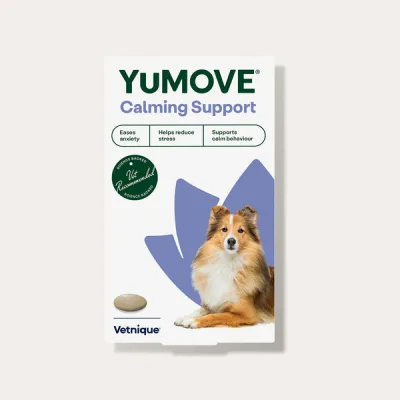
YuMOVE
Calming Support for Dogs
Once-a-day calming tablet: 200mg L-tryptophan with GABA fermentate, lemon balm and B-vitamins. Subscribe & Save at YuMOVE with free UK delivery.
£17.86first 2 Subscribe & Save orders, then £28.58; £35.72 one-off
Buy from YuMOVE
ADAPTIL
ADAPTIL Chew - Fast Acting
Event chew given about 30 minutes before fireworks, travel or a vet visit. L-tryptophan, green tea extract (L-theanine), thiamine and colostrum.
£21.16
Buy on Amazon UK
Swedencare / NutriScience
KalmAid Tablets
Salmon-flavoured calming tablets with L-tryptophan. For events, give 1-2 hours before (Swedencare's guidance).
£15.00
Buy on Amazon UKCaptain Calm earns a small commission from qualifying purchases through these links at no extra cost to you. Recommendations are based on independent research and review. Prices are pulled from each retailer and refreshed through the day; the price shown at checkout applies.
Keep reading
More on supplements & natural remedies

Melatonin for Dogs UK 2026: Dosing, Safety & Anxiety Relief
Can you give dogs melatonin in the UK? Only on a vet's prescription: melatonin is prescription-only here. The dose ranges vets use by weight, side effects, the xylitol risk, and the legal alternatives you can buy.

L-Theanine for Dogs (2026): Dosage Chart, Safety & How It Calms
L-theanine for dogs: dosage chart by weight from the Anxitane label, side effects, safety, what the dog studies actually show, and UK supplements that contain it.

Natural Sedatives for Dogs UK 2026: OTC Options & What Actually Works
No dog sedative is sold over the counter in the UK. Here is what you can buy instead: honest evidence ratings for valerian, L-theanine, Zylkene and more, which options need a vet (melatonin, CBD), and when to ask for prescription sedation.