Supplements & natural remedies
Natural Sedatives for Dogs UK 2026: OTC Options & What Actually Works
No dog sedative is sold over the counter in the UK. Here is what you can buy instead: honest evidence ratings for valerian, L-theanine, Zylkene and more, which options need a vet (melatonin, CBD), and when to ask for prescription sedation.

Quick Answer
No dog sedative or tranquilliser is sold over the counter in the UK: true sedatives need a vet's prescription. The closest thing you can buy without one is valerian: Dorwest Scullcap & Valerian tablets were licensed as a veterinary medicine for anxiety and excitability, and Dorwest's Valerian Compound drops act within about 30 minutes. Melatonin is more sedating but is prescription-only in the UK. For fear that needs real sedation, ask your vet.
Understanding Natural Sedation vs Calming for Dogs
First, let's clarify an important distinction:
- Sedatives suppress brain activity, causing drowsiness and reduced responsiveness. True sedatives are prescription-only in the UK.
- Natural calmers reduce anxiety without sedation, helping your dog feel relaxed but still alert and responsive.
When dog owners search for "natural sedatives," they typically want something to calm an anxious dog—not to knock them out. This guide covers both truly sedating natural options and effective anxiety-reducing alternatives.
Important UK Legal Note
In the UK, medications classified as sedatives (benzodiazepines, acepromazine, etc.) require a veterinary prescription. It is illegal to purchase or administer these without vet oversight. Most options in this guide can be bought without a prescription. The exceptions are melatonin, which is prescription-only in the UK, and CBD, which cannot legally be sold for pets.
The Most Effective Natural Sedatives for Dogs
These natural options have the strongest evidence for producing calming or mildly sedating effects:
1. Melatonin - The Closest to a Natural Sedative (Prescription Only in the UK)
Melatonin is a hormone that regulates sleep. It causes genuine drowsiness, which makes it the closest thing to a natural sedative. In the UK it is a prescription-only medicine and no melatonin product is authorised for dogs, so your vet prescribes it and sets the dose. Evidence for anxiety comes from case reports, not controlled trials. Too much causes vomiting, lethargy and wobbliness.
Doses vets commonly use (from Plumb's veterinary drug reference; the same bands as our melatonin calculator):
| Dog Size | Melatonin Dose | Timing |
|---|---|---|
| Under 10kg | 0.5-1mg | 1-2 hours before needed |
| 10-25kg | 1-3mg | 1-2 hours before needed |
| Over 25kg | 5mg | 1-2 hours before needed |
Used by some vets for: Noise fear (fireworks, thunder) and vet visits.
Caution: Never substitute human melatonin gummies or liquids: many contain xylitol, which is poisonous to dogs.
2. Valerian Root - Traditional Herbal Sedative
Valerian has been used for centuries as a calming herb in people and animals. How it works in dogs isn't established: the UK product licence lists its mode of action as "not known". Dorwest Scullcap & Valerian was licensed (AVM-GSL) for the relief of anxiety, nervousness, excitability and travel sickness, but we couldn't find it on the VMD's list of currently authorised products in September 2026.
- Dosing: Follow the label. Dorwest Scullcap & Valerian tablets are 1-2 tablets per 5kg bodyweight a day, given daily or before specific events
- Onset: About 30 minutes for Dorwest's Valerian Compound drops
- Duration: Up to about 2 hours for the drops; no more than 2 doses in 24 hours (Dorwest's guidance)
Best for: General anxiety, stress during thunderstorms, travel nervousness.
UK Products: Dorwest Scullcap & Valerian Tablets is the most popular UK veterinary herbal product containing valerian; Dorwest's Valerian Compound drops are the fast-acting (~30 minute) event-led version. For dosing by weight, side effects and the tablets-vs-drops decision, see our dedicated valerian for dogs guide.
3. L-Theanine - Calming Without Sedation
L-theanine doesn't sedate but produces a state of "alert relaxation." Dogs remain responsive but noticeably calmer.
- Dosing: The Anxitane label dose, twice a day: 25mg under 10kg, 50mg for 10-24kg, 100mg for 25kg and over
- Timing: Follow the pack. Virbac advises giving Anxitane twice daily, starting two weeks before a predictable event
Best for: Situational anxiety, vet visits, car travel, mild separation anxiety.
See our complete L-theanine guide for detailed dosing and product recommendations.
4. Chamomile - Gentle Calming Herb
Chamomile provides mild calming effects and is often found in combination products.
- Dosing: No veterinary dose for chamomile has been set, and the ASPCA lists chamomile as toxic to dogs. Only give it as part of a dog product, at the amount on the label
- Effect: Mild calming at most; there is little dog-specific research
Best for: Mild anxiety, stress-related digestive issues, general relaxation.
Comparing Natural Sedative Options
| Natural Option | Sedating Effect | Evidence Level | Onset Time |
|---|---|---|---|
| Melatonin (prescription only in UK) | Strong (drowsiness) | Limited (case reports) | 1-2 hours |
| Valerian | Mild-Moderate | Limited (UK-authorised product) | ~30 mins (drops) |
| L-Theanine | None (calming only) | Some (small studies) | Varies by product |
| Chamomile | Mild | Very limited; ASPCA lists as toxic | Unknown |
| Passionflower | Mild | Very limited | Unknown |
| CBD Oil | Variable | Can't legally be sold for pets in the UK | - |
UK Products for Natural Dog Sedation
Veterinary-Channel Products
- Dorwest Scullcap & Valerian - Contains valerian, scullcap, mistletoe and gentian. It was licensed as a herbal veterinary medicine (AVM-GSL), but we couldn't find it on the VMD's list of currently authorised products in September 2026.
- Zylkene - Alpha-casozepine from milk protein. Not sedating. Distributed through UK veterinary practices, with published evidence in dogs (Beata et al. 2007). For events, Vetoquinol advises starting 1-2 days before (5-7 days for some dogs).
- Nutracalm - Contains L-theanine, L-tryptophan, and GABA. Distributed through UK veterinary channels (Nutravet).
Over-the-Counter Options
- Pet Remedy - Valerian-based plug-in diffuser and spray. The one placebo-controlled trial in dogs found no significant effect (Taylor & Madden 2016)
- YuMOVE Calming Support - Daily tablet with L-tryptophan, GABA and lemon balm
- Adaptil - Pheromone-based (not sedating but reduces anxiety)
One Product at a Time
Add one product at a time, a week apart, so you can tell what helped, and don't stack sedating products without your vet. Keep expectations realistic: in a survey of 1,225 owners of firework-fearful dogs, 70% rated prescription medication effective, against 35% for herbal products (Riemer 2020).
If you've narrowed it down to an oral daily option, our best calming tablets for dogs UK review compares Zylkene, YuMOVE, Nutracalm, Anxitane and Dorwest on dose, onset and monthly cost.
When Natural Sedatives Aren't Enough
Natural options work well for mild to moderate anxiety, but some situations require veterinary intervention:
- Severe separation anxiety causing self-harm or property destruction
- Extreme noise phobia with panic attacks
- Aggression rooted in fear or anxiety
- Medical procedures requiring true sedation
- Long-distance travel where the dog is extremely distressed
In these cases, your vet may prescribe:
- Sileo (dexmedetomidine gel) - Licensed in the UK for noise fear; given at the first signs of fear
- Pexion (imepitoin) - Licensed in the UK for noise fear; started two days before the event
- Trazodone (off-licence) - Often used for situational anxiety
- Gabapentin (off-licence) - Often given before vet visits, sometimes with melatonin and acepromazine (the "Chill Protocol")
- Alprazolam (off-licence) - For severe situational anxiety
Sedation for Grooming or Travel
No product you can buy over the counter will sedate a dog for grooming or a long journey, and groomers can't give sedatives. For a mildly nervous dog, one calmer given beforehand (for example Valerian Compound drops about 30 minutes before) may take the edge off. For a dog that panics, snaps or can't be handled, ask your vet: they can prescribe medication for you to give at home before the appointment.
How to Sedate a Dog Naturally: Step-by-Step
For events you can plan for (vet visits, grooming, fireworks):
- A few days to two weeks before: Start a daily calmer if you use one: Zylkene 1-2 days before (5-7 days for some dogs), or Anxitane (L-theanine) twice daily from two weeks before
- If your vet has prescribed something: Give it at the time they specified
- About 30 minutes before: One event product, such as Dorwest Valerian Compound drops or an ADAPTIL Chew
- Create a calm environment: Dark room, white noise, comfortable bed
- Stay calm yourself: Dogs pick up on owner anxiety
Safety Considerations
Drug Interactions
Natural doesn't mean without risk. Avoid combining natural sedatives with:
- Prescription sedatives or tranquillisers - Additive effects can be dangerous
- Anaesthesia - Inform your vet of any supplements before surgery
- SSRI medications - Some herbs interact with antidepressants
- Blood pressure medications - Valerian may enhance effects
Breed Considerations
- Brachycephalic breeds (Bulldogs, Pugs): Extra caution with anything sedating due to breathing difficulties
- Senior dogs: Start with lower doses, metabolism is slower
- Dogs with liver disease: Many herbs are processed by the liver—consult your vet
Frequently Asked Questions
Can I give my dog Benadryl as a natural sedative?
No. In the UK, Benadryl does not contain diphenhydramine: it contains acrivastine or cetirizine, and the Plus Decongestant version adds pseudoephedrine, which is poisonous to dogs. Diphenhydramine is sold here as a sleep aid (for example Nytol). Do not give your dog any human antihistamine or sleep aid unless your vet names the product and the dose.
How long do natural sedatives last in dogs?
It depends on the product. Dorwest's Valerian Compound drops work for up to about 2 hours, with no more than 2 doses in 24 hours. Melatonin, if your vet prescribes it, is usually given 1-2 hours before it's needed. For L-theanine and other supplements, follow the pack: there is little published data on how long they last in dogs.
Can I combine multiple natural sedatives?
Add one product at a time, a week apart, so you can tell what helped. Many products already combine ingredients. Don't stack sedating products (valerian, passionflower, prescribed melatonin) without your vet's advice, and tell your vet about any supplement before surgery.
Is CBD oil a natural sedative for dogs?
CBD products for pets cannot legally be sold in the UK. The Veterinary Medicines Directorate treats them as veterinary medicines and none is authorised; a vet can prescribe one under the cascade if they judge it appropriate. In a controlled study using a fireworks recording, CBD did not reduce dogs' fear (Morris et al. 2020).
What's the strongest natural sedative for dogs?
No sedative is sold over the counter for dogs in the UK. The closest thing you can buy without a prescription is valerian: Dorwest Scullcap & Valerian tablets were licensed for anxiety and excitability, and Dorwest's Valerian Compound drops act within about 30 minutes. Melatonin is more sedating but prescription-only in the UK. If you need real sedation, ask your vet about Sileo, Pexion or medication to give before a visit.
Key Takeaways
- True sedatives require a UK veterinary prescription
- Melatonin is the most sedating natural option, but it is prescription-only in the UK
- Valerian is the strongest calmer you can buy without a prescription; follow the label dose
- L-theanine calms without sedation—ideal for keeping dogs alert but relaxed
- Add one product at a time and don't stack sedating products without your vet
- Always consult your vet for severe anxiety or before surgery
- Stick to the label dose; don't exceed it
- Natural sedatives are not appropriate for all situations
Related Resources
UK picks from this guide
Products covered in this guide
Direct affiliate links to the UK products discussed above — prices refreshed from each retailer, no upcharge for using them.

Dorwest Herbs
Valerian Compound for Dogs and Cats (30ml)
Fast-acting liquid valerian drops for event-led anxiety — fireworks, vet visits, travel. Three-herb extract (valerian, mistletoe, vervain) given on food or directly, working within around 30 minutes. The low-cost way to try valerian before committing to daily tablets.
£11.61
Buy on Amazon UK
Dorwest Herbs
Scullcap & Valerian Tablets + Valerian Compound (Bundle)
Scullcap & Valerian herbal tablets for daily use, plus 100ml Valerian Compound liquid for events. Long-established UK herbal range.
£48.66
Buy on Amazon UKVetoquinol
Zylkene Calming Supplement
Calming supplement with Alpha-Casozepine, a peptide derived from milk protein. Has published evidence for canine anxiety when used alongside behaviour modification.
£16.33
Buy on Amazon UK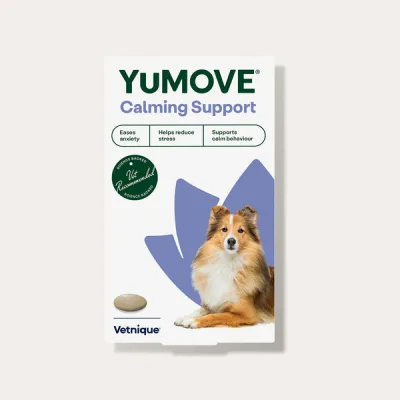
YuMOVE
Calming Support for Dogs
Once-a-day calming tablet: 200mg L-tryptophan with GABA fermentate, lemon balm and B-vitamins. Subscribe & Save at YuMOVE with free UK delivery.
£17.86first 2 Subscribe & Save orders, then £28.58; £35.72 one-off
Buy from YuMOVECaptain Calm earns a small commission from qualifying purchases through these links at no extra cost to you. Recommendations are based on independent research and review. Prices are pulled from each retailer and refreshed through the day; the price shown at checkout applies.
Keep reading
More on supplements & natural remedies

Melatonin for Dogs UK 2026: Dosing, Safety & Anxiety Relief
Can you give dogs melatonin in the UK? Only on a vet's prescription: melatonin is prescription-only here. The dose ranges vets use by weight, side effects, the xylitol risk, and the legal alternatives you can buy.

L-Theanine for Dogs (2026): Dosage Chart, Safety & How It Calms
L-theanine for dogs: dosage chart by weight from the Anxitane label, side effects, safety, what the dog studies actually show, and UK supplements that contain it.

L-Tryptophan for Dogs UK: Dosage, Evidence & When It Actually Helps
L-tryptophan turns into serotonin and is in many UK calming supplements, but dog trials are mixed. Label doses by weight, what each study found, and which medicines it must not be mixed with.