Supplements & natural remedies
Zylkene vs L-Theanine (Anxitane) for Dogs: Which Works Better?
Zylkene (alpha-casozepine from milk protein) vs Anxitane (L-theanine from green tea): the published dog studies, how each is given, what each costs per day, and which suits your dog.

Quick Answer
Neither is clearly better: both have a few small dog trials and no side effects reported in them. Zylkene (alpha-casozepine) is one capsule a day, started 1-2 days before a known stressor or given long-term. L-theanine (Anxitane) is given twice a day, starting about 2 weeks before an event. At Amazon UK prices in September 2026, a 35kg dog costs about £2 a day on Zylkene and about £1.50 a day on Anxitane. Try one for about 4 weeks before judging it.
How Zylkene Works
Zylkene's active ingredient is alpha-casozepine, a peptide from cow's milk protein (casein). In rat studies it acts on GABA-A receptors, the same receptors benzodiazepines such as diazepam target, but far more weakly, and it doesn't sedate. Zylkene is sold as a supplement, not a licensed medicine.
- How it's given: one capsule a day, opened onto food if needed
- Timing (maker): start 1-2 days before a known stressor and continue through it, or give daily for longer periods
- Evidence in dogs: small trials with mixed results. Beata 2007 found it worked about as well as selegiline in anxious dogs; a 2024 placebo-controlled trial of 62 dogs found only a weak effect before vet visits
- Contains: no L-tryptophan
How L-Theanine Works
L-theanine is an amino acid found in green tea. In the UK it is sold for dogs mainly as Anxitane (Virbac), a complementary feed. How it calms dogs isn't established; the brain-chemistry effects described online come from rodent and human studies. It did not sedate dogs in the one placebo-controlled study.
- How it's given (Anxitane label): 25mg under 10kg, 50mg for 10-24kg, 100mg for 25kg and over, twice a day
- Timing: start about 2 weeks before an event; there is no dog data on how fast a single dose acts
- Evidence in dogs: three small studies, all of Anxitane. The largest, Pike 2015, gave it to 18 dogs with storm fear without a placebo group, and 17 of 18 owners (94%) were satisfied
Head-to-Head Comparison
| Factor | Zylkene | L-Theanine |
|---|---|---|
| Active ingredient | Alpha-casozepine | L-theanine (Suntheanine) |
| Source | Bovine milk protein | Green tea extract |
| Doses a day | 1 capsule | 2 (morning and evening) |
| When to start before an event | 1-2 days (maker) | About 2 weeks (label) |
| Dog evidence | Small trials, mixed results | Three small studies of one product |
| Sedation | None reported | None in the placebo-controlled study |
| Cost, 35kg dog (Amazon UK, Sept 2026) | About £2 a day (450mg, 20 capsules for £40) | About £1.50 a day (Anxitane M/L, 30 tablets for £22.63, 2 a day) |
| Side effects | None reported in the main trials | None reported in the dog studies |
| Drug interactions | None known; not studied | None known; not studied in dogs |
When to Choose Zylkene
Choose Zylkene when:
- Your vet has recommended it as a first step before prescription medication
- You want a single daily capsule rather than two doses a day
- The stressful event is only a day or two away (Zylkene's maker says to start 1-2 days before)
- Your dog has separation anxiety and you want a daily supplement alongside training
- Your dog takes medication and you want a product with no L-tryptophan (ask your vet first all the same)
- You have a large dog — the 450mg capsule covers dogs up to 60kg in one dose
When to Choose L-Theanine
Choose L-theanine when:
- You can plan ahead: an event such as fireworks or storm season is 2 or more weeks away
- Your dog has mild anxiety or predictable stress
- Cost matters: for a large dog it worked out cheaper per day at September 2026 prices
- You want a supplement that doesn't cause sedation
- Your dog already takes calming treats well (many contain L-theanine; check the dose per treat)
Can You Combine Zylkene and L-Theanine?
No interactions between them are known, but they haven't been studied together. We'd start with one and give it about 4 weeks, so you can tell whether it helps; if you then want to add the other, ask your vet first, especially if your dog takes any medication.
Products Containing Each Ingredient
Zylkene (Alpha-Casozepine)
- Zylkene 75mg — small dogs (up to 10kg)
- Zylkene 225mg — medium dogs (10-30kg)
- Zylkene 450mg — large dogs (30-60kg)
L-Theanine Products
- Anxitane (Virbac): L-theanine tablets; S (50mg) for small dogs and cats, M/L (100mg) for dogs over 10kg
- ADAPTIL Chew: green tea extract (a source of L-theanine) with L-tryptophan, thiamine and colostrum; it contains no pheromone
- KalmAid: tablets listed with L-theanine and L-tryptophan; the maker doesn't publish the amount per tablet
Our Verdict
Pick by timing, then give it a fair trial.
If an event is 2 or more weeks away, Anxitane is a reasonable first try and was the cheaper option for a large dog at September 2026 prices. If it's a day or two away, or you want one capsule a day, try Zylkene. Neither has strong evidence, so if one hasn't helped after about 4 weeks, try a different approach (training, a pheromone diffuser, or a vet conversation about medication) rather than another brand of the same thing.
Frequently Asked Questions
Is Zylkene or L-theanine better for dogs?
Neither is clearly better: both have a few small dog trials, with no side effects reported. Zylkene is one capsule a day, started 1-2 days before a known stressor. L-theanine (Anxitane) is given twice a day, starting about 2 weeks before an event. Choose by timing and cost, and give it about 4 weeks before judging it.
Is Anxitane the same as Zylkene?
No. Anxitane (Virbac) contains L-theanine, an amino acid from green tea. Zylkene (Vetoquinol) contains alpha-casozepine, a peptide from cow's milk protein. Both are sold as supplements rather than licensed medicines, and neither sedates.
Can you give a dog Zylkene and L-theanine together?
No interactions between them are known, but they haven't been studied together. Start with one so you can tell whether it helps, and ask your vet before adding the other, especially if your dog takes any medication.
For a full breakdown of all calming supplements for dogs, including Nutracalm, Dorwest, and Purina Calming Care, see our complete supplement comparison guide.
UK picks from this guide
Products covered in this guide
Direct affiliate links to the UK products discussed above — prices refreshed from each retailer, no upcharge for using them.
Vetoquinol
Zylkene Calming Supplement
Calming supplement with Alpha-Casozepine, a peptide derived from milk protein. Has published evidence for canine anxiety when used alongside behaviour modification.
£16.33
Buy on Amazon UK
Swedencare / NutriScience
KalmAid Tablets
Salmon-flavoured calming tablets with L-tryptophan. For events, give 1-2 hours before (Swedencare's guidance).
£14.25
Buy on Amazon UK
ADAPTIL
ADAPTIL Chew - Fast Acting
Event chew given about 30 minutes before fireworks, travel or a vet visit. L-tryptophan, green tea extract (L-theanine), thiamine and colostrum.
£21.16
Buy on Amazon UK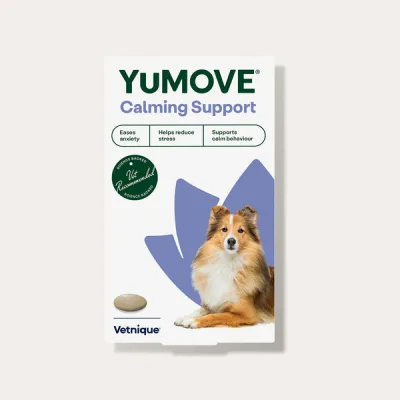
YuMOVE
Calming Support for Dogs
Once-a-day calming tablet: 200mg L-tryptophan with GABA fermentate, lemon balm and B-vitamins. Subscribe & Save at YuMOVE with free UK delivery.
£17.86first 2 Subscribe & Save orders, then £28.58; £35.72 one-off
Buy from YuMOVECaptain Calm earns a small commission from qualifying purchases through these links at no extra cost to you. Recommendations are based on independent research and review. Prices are pulled from each retailer and refreshed through the day; the price shown at checkout applies.
Keep reading
More on supplements & natural remedies

Melatonin for Dogs UK 2026: Dosing, Safety & Anxiety Relief
Can you give dogs melatonin in the UK? Only on a vet's prescription: melatonin is prescription-only here. The dose ranges vets use by weight, side effects, the xylitol risk, and the legal alternatives you can buy.

L-Theanine for Dogs (2026): Dosage Chart, Safety & How It Calms
L-theanine for dogs: dosage chart by weight from the Anxitane label, side effects, safety, what the dog studies actually show, and UK supplements that contain it.

L-Tryptophan for Dogs UK: Dosage, Evidence & When It Actually Helps
L-tryptophan turns into serotonin and is in many UK calming supplements, but dog trials are mixed. Label doses by weight, what each study found, and which medicines it must not be mixed with.